As we watch the disturbing daily images of a dry Darling River, parched Menindee Lakes, millions of dead fish, and outback towns without drinkable water, both bush and city are screaming – Why?
Who is responsible they ask? Name the scapegoats and brand them criminals is demanded.
Any lesser response would be shameful, but some reactions, while understandable, are not rational.
Before we look more closely at why and how these unacceptable events have occurred, we need to put to rest some misconceptions about this river and recent claims made by some aboriginal people that the Darling was previously a “Mighty River” that always flowed.
It wasn’t. After discovery by English explorers Stuart and Hume in 1828, history kept at Menindee tells us it was bone dry there at least 48 times up to 1960 – something that no doubt also happened for hundreds of years before.
The paddle steamer NILE on the dry bed of the Darling River, near Bourke, about 1898. From Wikimedia Commons, the free media repository (more…)
The Global Warming Policy Foundation has published (May 2011) a detailed report about the shale gas revolution and its likely implications for climate policy.
The report , written by Matt Ridley and with a foreword by Professor Freeman Dyson, finds that shale gas:
is not only abundant but relatively cheap and therefore promises to take market share from nuclear, coal and renewable energy and to replace oil in some transport and industrial uses, over coming decades.
will help to keep the price of nitrogen fertiliser low and hence keep food prices down, other things being equal.
is unlikely to be a major source of pollution or methane emissions, but in contrast promises to reduce pollution and accelerate the decarbonisation of the world economy.
Naturally, after causing a boom in demand for gas, and promoting it, greens are now trying to prevent exploration and exploitation of this massive new energy source. And just as naturally they are being supported by competitive energy sources threatened by this gas bonanza – French nuclear, Russian gas, the coal geo-sequestration crowd and the whole wind/solar lobby.
Some of these shales will also produce significant oil. Nick Grealy looks here at the coming impact of oil and gas from “Wet Shale”:
71% of the earth’s surface is covered by water and large areas of the land are covered by frozen water. Water and water vapour are also significant components of the atmosphere.
The atmosphere and its trace component of carbon dioxide is a very thin skin in close contact with the surface of all of this water. Carbon dioxide is very soluble in water and Henry’s Law says that as the temperature of water changes the quantity of carbon dioxide dissolved in that water will change.
Thus if the sea surface temperature increases, carbon dioxide will be expelled to the atmosphere just like carbon dioxide bubbles are expelled from a warming beer. And as sea surface temperature falls, carbon dioxide will dissolve in the cooling water and this reduces the carbon dioxide in the atmosphere.
This effect can be seen in seasonal, medium term and long term trends.
The seasonal variation in atmospheric content of carbon dioxide is well known, and the huge southern oceans are key players. See the short paper by Bob Beatty on the carbon dioxide cycle at : http://www.bosmin.com/HenrysLaw.pdf [PDF, 689 KB]
When it is winter in the southern hemisphere, the cold surface water of the oceans absorb carbon dioxide and the content of carbon dioxide in the air falls suddenly by about 4 ppm. This is reversed when the southern oceans warm in summer, and the carbon dioxide is expelled from the oceans. (The seasonal summer growth and winter fall of northern hemisphere vegetation adds to this seasonal fluctuation caused mainly by the southern oceans.)
On a medium time scale (21 year moving average) Professor Lance Endersbee published a short paper in August 2008 and he concluded that the oceans regulate the carbon dioxide in the atmosphere and the influence of human-generated carbon dioxide in the atmosphere is negligible. His paper included the following diagram:
On longer time scales, ocean mixing caused by deep ocean currents causes long term changes in ocean temperatures. These changes also affect long term carbon dioxide trends. Carbon dioxide held in large quantities in cold deep ocean water is slowly released as ocean currents mix this cold water with warmer surface water. The reverse occurs as the sea surface cools, absorbs carbon dioxide and the cold dense water sinks to the ocean floor.
The most dramatic evidence of this lagged response comes from ice core data. These show that significant turning points in temperature precede the corresponding turning points in carbon dioxide content in air by between 650 and 1600 years.
Henry’s Law can and has been tested in laboratory experiments. The other data provides additional evidence for the conclusion that the major factor regulating carbon dioxide in the atmosphere, on all time scales, is the temperature of the oceans. Ocean temperature is controlled by solar cycles, cloud cover, ocean currents and undersea volcanism.
Earth Hour is a sacred rite of the global warming religion whose message is: confess, do penance (turn out the lights for an hour once a year), and your sins will be forgiven. (more…)
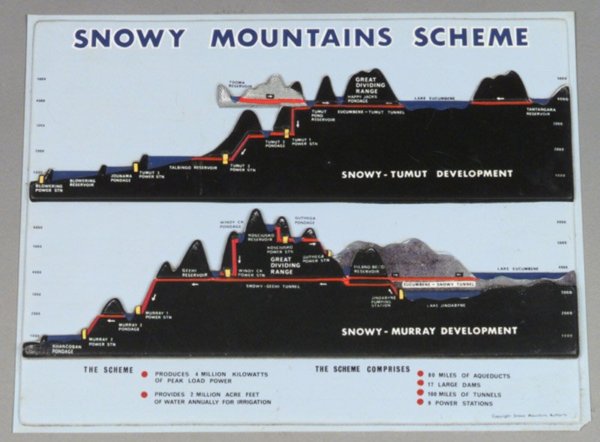
HYDRO ELECTRIC POWER, PUMP STORAGE AND BATTERY STORAGE.
Terence Cardwell
TUMUT 1 HYDRO ELECTRIC POWER STATION.
There has been so much talk and false information about Hydro Electric Power Stations, pump storage and System battery storage that I felt it was time to put the facts straight.
Some of the most incorrect and misleading information is from self appoint university experts who have made all sorts of ridiculous statements. As well as from some politicians who either live in fairy land or are deliberately lying. You decide.
Do I know what I’m taking about; I was with the Electricity Commission of N.S.W. for 26 years in a number of positions including the commissioning and in charge of the Coal Fired Thermal Generators at Tallawarra, Wallerawang and Munmorah Power Stations. (more…)
Today, laser hair removal at home is gaining much popularity. Laser hair removal is a permanent and long term process and has many drawbacks. In this article, we will review the Best Nose hair Trimmer removal devices for home use.
Tanda Me My Elos Syneron Touch Hair Removal System
Most laser hair removal systems do not work with dark toned skin. However, this gadget is ideal for dark toned people. Here, ELOS technology is used to remove unwanted hair. More or less it is similar to IPL pulse technology; the only major difference is that the former is color blind.
Remington iLIGHT Pro Plus Quartz Hair Removal System
It does not use laser flash; it uses quartz light from an ordinary glass bulb. It uses IPL pulses to remove hair. Generally, IPL pulses take more time than direct laser. However, it is tricky to use it at pinpoint areas. It covers a large area but with less accuracy. It comes with a skin tone sensor. However, this model might not suit the dark skin toned user or the user with light unwanted hair. Treatments for adverse results of laser hair removal are less painful because direct laser is not used.
Tria Beauty Hair Removal Laser 4X
Tria Laser hair removal system was the first LHR system that got approved by FDA for effective and safe use. Most lasers won’t work with dark skin tone. However, this model comes with a built in skin sensor and works with almost all skin tones. It comes with an awesome digital interface and strength settings. Due to its small size, you will be able to use it in small target areas. It is a cordless device.
Silk’n Flash & Go Hair Removal Device Original
It is yet another laser hair removal device which uses IPL pulses for hair removal. It is a corded device. It is the least expensive model in our list. It comes with a skin sensor and is not appropriate for dark toned and light skin users. It comes with a wide head so the concentration of flash is less accurate for pinpoint areas.
Philips Lumea Comfort IPL Hair Removal System
As the name suggests, this device uses IPL pulses for hair removal. The best thing is it is affordable. It comes with slide & flash mode that lets you glide the device over your skin. It flashes IPL pulses on its way. Basically, you won’t have to deal with each and every patch of your skin like other laser hair removal devices. It comes with 5 skin intensity settings and might not work for dark toned users and users with soft unwanted hair.
Why do taxpayers have to subsidize this? Why do environmentalists give it a free pass?
By Ron Arnold
It uses tons of fossil fuels every day, emits a greenhouse gas that’s like CO2 on steroids, can’t do the job it’s made for, costs taxpayers exorbitant fees, and makes the federal government look mentally ill for giving it outrageous subsidies. It also chops up birds, bats and scenery with roads and monstrous 400-foot-tall machines. “It” is wind power, of course.
These harsh facts were condensed into a preliminary draft study of wind subsidies by researcher Teresa Platt, who circulated it to specialists for vetting. I obtained a copy of the extensively footnoted working draft, which gave chilling reality to the truth behind wind industry claims.
“Every year since the 1980s,” Platt’s study said, “the 5,000 turbines at NextEra’s Altamont Pass in California kill thousands of slow-reproducing red-tailed hawks, burrowing owls, kestrels, as well as iconic golden eagles, and bats.” The birds Platt mentions are raptors – birds of prey – particularly valued for their agricultural role in killing mice and other crop-damaging rodents. Eagles, both golden eagles and bald eagles, have long impressed Americans for their majesty, and the bald eagle was selected by our Founding Fathers as our national emblem.
I asked Bob Johns, spokesman for the American Bird Conservancy, about wind farm eagle mortality. He confirmed Platt’s study and told me the Altamont operation alone has killed more than 2,000 golden eagles. But that’s not all. “Nationwide, the wind industry kills thousands of golden eagles without prosecution,” Johns said, “while any other American citizen even possessing eagle parts such as feathers would face huge fines and prison time.”
Huge is right. Violate either the Migratory Bird Treaty Act or the Eagle Protection Act, and you could get fined up to $250,000 or get two years imprisonment.
Not a single wind farm operator has yet been prosecuted for killing birds, yet in 2009 ExxonMobil got whacked with a $600,000 fine for killing 85 common ducks and other birds that flew into uncovered tanks on its property. Other similarly outrageous revenge-style penalties have been assessed on oil companies by the viciously ideological anti-fossil fuel Obama administration. (more…)
A recent report from friends who suffered terrible losses of buildings, fences, pasture and cattle in the Coonabarabran fire commenced with the ominous and oft-repeated message: “a raging fire came out of the National Park straight for us”.
There is only one way to limit fire damage – reduce the fuel available.
Fuel load can be reduced in three ways – by grazing animals, by planned small “cool” fires, or by mechanical reduction with slashers, mulchers or dozers.
Australia’s grassland landscape was created and managed by generations of Aborigines who were masters at using man’s most useful tool – fire. Every explorer from Abel Tasman (1642) and Captain Cook (1770) onwards noted the smoke in the sky and the burnt trees whenever they landed. This burning created the open grassland landscapes that dominated pre-European Australia. Aborigines lit fires continually, mainly to keep their fires sticks alight. Their small patchwork fires caused no permanent damage to the environment and fortuitously created and maintained the healthy grasslands and open forests on which many animals and Aborigines depended.
There have been two major changes to the tree/grass balance since European settlement. In the fertile well-watered coastal strip, large areas of thick scrub and open forest were logged and cleared for timber, farms, towns, roads, schools and the domesticated grasses of suburban lawns. Most of those trees have been displaced by those people who now, in ignorance, are also destroying the grasslands and remaining open forests by locking up land and preventing any form of regrowth control. Having destroyed much of the coastal forests and scrubs, they are now destroying the open forests and grasslands.
Misguided tree lovers and green politicians have locked the gates on ever-increasing areas of land for trees, parks, heritage, wilderness, habitat, weekend retreats, carbon sequestration etc. Never before on this ancient continent has anyone tried to ban land use or limit bushfires on certain land. The short-sighted policy of surrounding their massive land-banks with fences, locked gates, fire bans and exclusion of livestock has created a new alien environment in Australia. They have created tinder boxes where the growth of woody weeds and the accumulation of dead vegetation in eucalypt re-growth create the perfect environment for fierce fires.
Once ignited by lightning, carelessness, or arson, the inevitable fire-storms incinerate the park trees and wildlife, and then invade the unfortunate neighbouring properties. Many of today’s locked-up areas were created to sequester carbon to fulfil Kyoto obligations. Who pays the carbon tax on the carbon dioxide released to the atmosphere by wild fires? The green bureaucracies and politicians are clearly mis-managing their huge land-bank. Aborigines and graziers did a far better job. There should be a moratorium on locking up any more land and a return to sustainable management for existing land holdings.
Wake Up Australia: we are becoming Green and Defenceless.
As Australia’s industrial capacity declines, Australia is becoming green and defenceless. History holds lessons.
Back in Dec 1941, Japan suddenly attacked the huge US Naval base at Pearl Harbour. Three days later, two “invincible” British warships, “Repulse” and “Prince of Wales” were sunk by Japanese planes off Malaya. Soon Japanese armies were rampaging through Asia towards Australia. By Feb 1942, the “impregnable” British fortress of Singapore surrendered and Japanese bombs were falling on Darwin. By Sept 1942 the Japanese army had slashed their way down the Kokoda Track and could see the lights of Port Moresby. They were looking across Torres Strait to Australia. At that time, most of our trained soldiers were fighting Rommel in North Africa or in Japanese prison camps.
Suddenly Australia was on its own and needed to defend itself with what we had here.
Soldiers volunteered and were conscripted. Australian conscripts formed part of the force that met the Japanese on the Kokoda Track.
Of course Australia had very few engineering tools when war broke out, especially key tools like lathes. F W Hercus Manufacturing started making a copy of the famous American Southbend lathe in the 1940’s. These machines were installed in factories around Australia and used to make small parts for the war effort. Most of the lathe operators were women.
Enfield Rifles, Bren Guns and Vickers Machine Guns were produced in large numbers at the Small Arms Factory at Lithgow supported by feeder factories in the area. Britain lost so many weapons at Dunkirk that Australian factories were sending guns to them. We could not do that now.
Motor oil was produced in limited quantities from oil shale at Glen Davis, but petrol was in serious short supply, and had been rationed since 1940. With the fall of Singapore, this shortage became severe, and charcoal burners suddenly appeared to keep cars and trucks moving. Kerosene was scarce so carbide lights were widely used. The demand for charcoal was so great that firewood became scarce so it was also rationed.
To conserve supplies for soldiers, rationing was introduced for tea, clothing, butter, sugar, meat and cigarettes. Hotels were only allowed to serve alcohol twice a day for one hour at a time of their choosing.
An immediate critical shortage was copper for cartridge cases and communications – Australia had mines producing lead, zinc, silver, gold and iron, but there was a critical shortage of copper. Fortuitously, just before the Japanese attack on Pearl Harbour, an exploration drill hole at Mount Isa had struck rich copper ore.
Mount Isa was called on to avert a calamitous shortage of copper in Australia. With government encouragement, Mount Isa Mines made the brave decision to suspend the profitable silver/lead/zinc operations and convert all mining and treatment facilities to extracting copper.
The lead concentrator could be converted to treat copper ore, but the biggest problem was how to smelt the copper concentrates. Luckily the company had skilled engineers and metallurgists in the lead smelter. In a miracle of improvisation, scrap steel and spare parts were purchased and scavenged from old mines and smelters from Cloncurry, Mt Elliott, Mt Cuthbert and Kuridala and cobbled into a workable copper smelter. In 1943 the first Mount Isa blister copper was produced. Production continued after the war when Mount Isa returned to extracting the then more profitable silver/lead/zinc. Later new plant was built enabling both lead and copper metal to be produced from this fabulous mine.
This story of the importance of self-reliance has lessons for today. (more…)


 RSS
RSS