|
|
A Diesel in the Shed.
You can have your solar panels
and your turbines on the hills;
You can use the warmth of sunshine
to reduce your heating bills.
You can dream you’re self-sufficient
as you weed your vegie bed;
As long as you make sure to keep
A diesel in the shed.
When I was a kid on a dairy farm in Queensland, we relied on green energy – horses and human muscles provided motive power; fire-wood and beeswax candles supplied heat and light; windmills pumped water and the sun provided solar energy for growing crops, vegies and pastures.Railway Jobs 2017 There were no refrigerators – things were kept cool by evaporation of water in a Coolgardi safe. Cold water for drinks came from a water bag hanging in the shade near the back steps. We had no hot water systems – we bathed one after another in warm water heated in a kettle on the wood stove. The only “non-green” energy used was a bit of kerosene for the kitchen lamp, and petrol for a small Ford utility. We were almost “sustainable” but there was little surplus for others. Labour was cheap and food was expensive.bluestacks for windows 10
Our life changed dramatically when we put a thumping diesel in the dairy shed. This single-cylinder engine drove the milking machines and an electricity generator which charged 16 lead-acid 2 volt batteries sitting on the veranda. This 32 volt DC system powered a modern marvel – bright light, at any time, in every room, at the touch of a switch. This system could also power Mum’s new electric clothes iron as long as someone started the engine for a bit more power.
There were no electric self-starters for diesels in those days – just a heavy crank handle. Here is the exact model which saved us from a life of dairy drudgery, kerosene lights and Mother Potts irons:
See and listen: https://www.youtube.com/watch?v=itxY98A8wHQ
But all that effort, noise and fumes were superseded when every house and dairy got connected to clean silent “coal power by wire”, and coal was used to produce coke for the new slow-combustion stoves. Suddenly the trusty “Southern Cross” diesel engines disappeared from Australian sheds and dairies, AGA coke-burning cookers displaced the old smoky wood-burning stoves in the kitchen, and clean-burning coal gas replaced wood stoves and dirty open fires in the cities.
(more…)
April 20th, 2017 |
Categories: Alternate Energy, Newsletters, Solar Power, Subsidies, Wind Power |
Why Vote?
In a long life of observing and participating in many election campaigns, I have never before seen anything approaching the ferocity and stupidity of the “war on carbon”. Are we fighting –
- “Carbon” which is the essential element at the centre of every molecule of life on earth?… OR
- “Carbon Dioxide” which is the natural atmospheric gas-of-life that feeds all plants?… OR
- “Carbon Fuels” such as oil, gas and coal which are natural hydrocarbons which store ancient solar and hydro-thermal energy and which provide most of the electrical and motive power that supports and feeds every society on Earth?
- The Answer? Judging from their statements and sloppy language, the alarmists and green zealots are fighting all three. They aim to make “carbon” a dirty word and to deny all humanity the great benefits of hydro-carbon energy.
Like all futile wars, this one will eventually collapse. But it has already done tremendous damage to the global economy and financial stability.
Ominously, Malcolm Turnbull signed Australia onto the Paris Climate Agreement. This appalling document should be forever draped around his neck like a dead albatross. We need our own CLEXIT – climate exit from the climate Czars of Europe. Julie Bishop and Greg Hunt supported him and were collaborators in wasting or committing over one billion dollars on climate nonsense. Please put these three and their supporters last in their electorates.
(more…)
June 25th, 2016 |
Categories: The Carbon Sense Coalition |
Today, laser hair removal at home is gaining much popularity. Laser hair removal is a permanent and long term process and has many drawbacks. In this article, we will review the Best Nose hair Trimmer removal devices for home use.
- Tanda Me My Elos Syneron Touch Hair Removal System
Most laser hair removal systems do not work with dark toned skin. However, this gadget is ideal for dark toned people. Here, ELOS technology is used to remove unwanted hair. More or less it is similar to IPL pulse technology; the only major difference is that the former is color blind.
- Remington iLIGHT Pro Plus Quartz Hair Removal System
It does not use laser flash; it uses quartz light from an ordinary glass bulb. It uses IPL pulses to remove hair. Generally, IPL pulses take more time than direct laser. However, it is tricky to use it at pinpoint areas. It covers a large area but with less accuracy. It comes with a skin tone sensor. However, this model might not suit the dark skin toned user or the user with light unwanted hair. Treatments for adverse results of laser hair removal are less painful because direct laser is not used.
- Tria Beauty Hair Removal Laser 4X
Tria Laser hair removal system was the first LHR system that got approved by FDA for effective and safe use. Most lasers won’t work with dark skin tone. However, this model comes with a built in skin sensor and works with almost all skin tones. It comes with an awesome digital interface and strength settings. Due to its small size, you will be able to use it in small target areas. It is a cordless device.
- Silk’n Flash & Go Hair Removal Device Original
It is yet another laser hair removal device which uses IPL pulses for hair removal. It is a corded device. It is the least expensive model in our list. It comes with a skin sensor and is not appropriate for dark toned and light skin users. It comes with a wide head so the concentration of flash is less accurate for pinpoint areas.
- Philips Lumea Comfort IPL Hair Removal System
As the name suggests, this device uses IPL pulses for hair removal. The best thing is it is affordable. It comes with slide & flash mode that lets you glide the device over your skin. It flashes IPL pulses on its way. Basically, you won’t have to deal with each and every patch of your skin like other laser hair removal devices. It comes with 5 skin intensity settings and might not work for dark toned users and users with soft unwanted hair.
December 14th, 2009 |
Categories: The Carbon Sense Coalition |
HYDRO ELECTRIC POWER, PUMP STORAGE AND BATTERY STORAGE.
Terence Cardwell

TUMUT 1 HYDRO ELECTRIC POWER STATION.
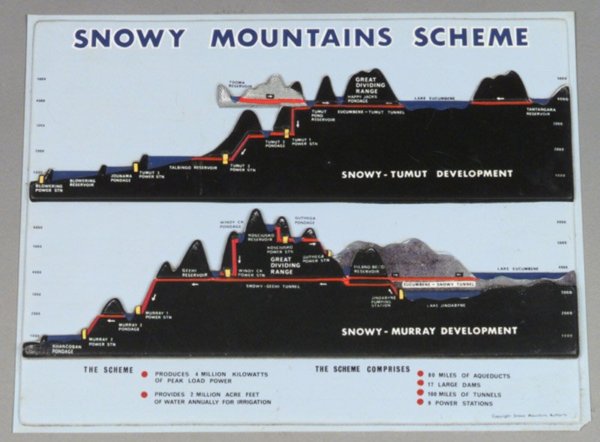
There has been so much talk and false information about Hydro Electric Power Stations, pump storage and System battery storage that I felt it was time to put the facts straight.
Some of the most incorrect and misleading information is from self appoint university experts who have made all sorts of ridiculous statements. As well as from some politicians who either live in fairy land or are deliberately lying. You decide.
Do I know what I’m taking about; I was with the Electricity Commission of N.S.W. for 26 years in a number of positions including the commissioning and in charge of the Coal Fired Thermal Generators at Tallawarra, Wallerawang and Munmorah Power Stations.
(more…)
October 16th, 2017 |
Categories: Alternate Energy, Power generation |
Wake Up Australia: we are becoming Green and Defenceless.
As Australia’s industrial capacity declines, Australia is becoming green and defenceless. History holds lessons.
Back in Dec 1941, Japan suddenly attacked the huge US Naval base at Pearl Harbour. Three days later, two “invincible” British warships, “Repulse” and “Prince of Wales” were sunk by Japanese planes off Malaya. Soon Japanese armies were rampaging through Asia towards Australia. By Feb 1942, the “impregnable” British fortress of Singapore surrendered and Japanese bombs were falling on Darwin. By Sept 1942 the Japanese army had slashed their way down the Kokoda Track and could see the lights of Port Moresby. They were looking across Torres Strait to Australia. At that time, most of our trained soldiers were fighting Rommel in North Africa or in Japanese prison camps.
Suddenly Australia was on its own and needed to defend itself with what we had here.
Armies need soldiers, weapons, bullets, vehicles, fuel, food, alcohol (and cigarettes).
Soldiers volunteered and were conscripted. Australian conscripts formed part of the force that met the Japanese on the Kokoda Track.
Of course Australia had very few engineering tools when war broke out, especially key tools like lathes. F W Hercus Manufacturing started making a copy of the famous American Southbend lathe in the 1940’s. These machines were installed in factories around Australia and used to make small parts for the war effort. Most of the lathe operators were women.
Enfield Rifles, Bren Guns and Vickers Machine Guns were produced in large numbers at the Small Arms Factory at Lithgow supported by feeder factories in the area. Britain lost so many weapons at Dunkirk that Australian factories were sending guns to them. We could not do that now.
Motor oil was produced in limited quantities from oil shale at Glen Davis, but petrol was in serious short supply, and had been rationed since 1940. With the fall of Singapore, this shortage became severe, and charcoal burners suddenly appeared to keep cars and trucks moving. Kerosene was scarce so carbide lights were widely used. The demand for charcoal was so great that firewood became scarce so it was also rationed.
To conserve supplies for soldiers, rationing was introduced for tea, clothing, butter, sugar, meat and cigarettes. Hotels were only allowed to serve alcohol twice a day for one hour at a time of their choosing.
An immediate critical shortage was copper for cartridge cases and communications – Australia had mines producing lead, zinc, silver, gold and iron, but there was a critical shortage of copper. Fortuitously, just before the Japanese attack on Pearl Harbour, an exploration drill hole at Mount Isa had struck rich copper ore.
Mount Isa was called on to avert a calamitous shortage of copper in Australia. With government encouragement, Mount Isa Mines made the brave decision to suspend the profitable silver/lead/zinc operations and convert all mining and treatment facilities to extracting copper.
The lead concentrator could be converted to treat copper ore, but the biggest problem was how to smelt the copper concentrates. Luckily the company had skilled engineers and metallurgists in the lead smelter. In a miracle of improvisation, scrap steel and spare parts were purchased and scavenged from old mines and smelters from Cloncurry, Mt Elliott, Mt Cuthbert and Kuridala and cobbled into a workable copper smelter. In 1943 the first Mount Isa blister copper was produced. Production continued after the war when Mount Isa returned to extracting the then more profitable silver/lead/zinc. Later new plant was built enabling both lead and copper metal to be produced from this fabulous mine.
This story of the importance of self-reliance has lessons for today.
(more…)
December 7th, 2014 |
Categories: Alternate Energy, Coal, Lima, Warmer is Better |
“The time has come,” the Walrus said,
“To talk of many things:
Of shoes–and ships–and sealing-wax–
Of cabbages–and kings–
And why the sea is boiling hot–
And whether pigs have wings.”
The Walrus and The Carpenter, Lewis Carroll, from Through the Looking-Glass and What Alice Found There, 1872
Once upon a time there was a land where cabbages were very popular. People used them for all sorts of things. There were central farms where they were grown, and distributed to supermarkets from where people bought them. The subjects in this land could buy the cabbages for about 17 cents each.
One day the King decided that it was a bad thing for the cabbages to be produced by these large farms. He said it hurt the environment to have them transported all the way to the supermarkets. He also said too much water was used on those farms.
(more…)
November 15th, 2009 |
Categories: Alternate Energy, Policy Issues, Solar Power |
OPEN LETTER TO THE PRIME MINISTER, AND TO THE LEADER OF THE OPPOSITION.
We are a group of retired scientists and engineers in Queensland, and we are alarmed at the direction our country is being taken through your respective policies, which are virtually identical, on renewable energy. Our names are listed here. We have studied this issue for years now, and we have here outlined the serious defects in your energy policy, and asked some questions which have thus far remained unanswered.
Energy Policy. By far the greatest risk to Australia’s electricity supply is the false belief that renewables (wind and solar) can be a like-for-like replacement for dispatchable fossil fuelled generators. They are not, and can never be. A one-MW wind or solar plant does not replace a one-MW coal plant. Not even close. Solar plants will produce electricity on average at 20% of their installed capacity. They produce power for little more than eight hours per day and none at all at night or on rainy days. Wind plants can be expected to produce electricity on average 25% to 30% of installed capacity, but output can be as little as 2% or as much as 70% with little warning.
Media reports in June this year referred to a “wind drought” across Southern Australia resulting in wind production being “40% below the previous corresponding period”. This is a problem but masks an even more intractable false belief; that an energy grid can run on averages. It can’t, because energy consumed has to be generated in real time. Just one example of that wind drought: at 2.20 PM on 5 th May this year, all the wind farms in Australia (4400 MW installed capacity in WA, SA, Vic, Tas and NSW) were producing just 121MW. (That’s 4400 MW capacity generating only 121MW). In fact for May and June this year this was not uncommon. Large high pressure systems over southern Australia meant little or no wind for weeks at a time.
The grid has to meet demand every minute of every day. AEMO can and does order fossil fuelled plants to produce electricity. Clearly it cannot do so for wind or solar. Just imagine Australia with a largely renewable energy system — it is night time so no solar power is being generated, and the whole of Southern Australia is dominated by high pressure systems (this is not unusual) and wind is producing at only 2% of installed capacity! To date dispatchable fossil fuelled generators have been able to shoulder the load but as dispatchable capacity is retired this may no longer be possible, with disastrous consequences.
On the face of it the answer is storage, either battery, pumped hydro or molten salt. This brings us to the next false belief; that storage is some sort of magic pudding. The capacity of current storage technologies is miniscule compared with daily demand. Australian grid demand varies between 18,000 MW minimum and 30,000 MW maximum. Over 24 hours this works out to about 600,000 MWh per day. The Tesla battery being installed in South Australia is said to be the world’s largest and to hold 129 MWh fully charged. This may be enough to support the local grid for a short time until dispatchable capacity can be started, but an unimaginable number of Tesla batteries would be necessary to maintain grid supply for a day or a week, or even longer in the worst case.
(more…)
October 13th, 2017 |
Categories: Letters, Renewable Energy Targets |
Dr. John Happs
Despite alarmist claims of “catastrophic global warming”, there is no empirical evidence to confirm that or any acceleration in global sea level rise. Notwithstanding this lack of evidence many people, often those with vested interests, still cling to the alarmist beliefs that catastrophic sea level rise is imminent.
If you live on an overpopulated island with high unemployment, limited resources and were already dependent on aid from the outside world, there is one sure-fire strategy for bringing in extra money. This involves ignoring the lack of empirical evidence for any acceleration in global sea level rise or increase in extreme weather whilst taking the following steps:
(more…)
September 21st, 2019 |
Categories: Sea Levels |
Earth Hour is a sacred rite of the global warming religion whose message is: confess, do penance (turn out the lights for an hour once a year), and your sins will be forgiven.
(more…)
May 17th, 2008 |
Categories: Alternate Energy |
This question was received in response to the article “Government Gas Wastrels”
Re: “Government Gas Wastrels”
Well, Viv, Gas burns cleaner.
And Big Coal doesn’t need to be defended — it is capable of defending itself, or are you Big Coal itself… bought paid, signed sealed and delivered…?
B&T
Reply to B&T:
“Carbon Sense” does not defend or oppose any particular energy source. We will comment on their technical or economic advantages and disadvantages. We oppose government taxing some and not others for spurious climate reasons. And we oppose government forcing everyone to pay more for electricity because politicians have forced electricity companies to use unreliable and costly means of generating their power (via their market mandate schemes).
You should be free to buy gas energy, or solar energy, or coal energy, or cannabis energy, or cow pat energy as long as you pay the full cost, and leave me also free to make my choices on whatever basis I choose.
My personal position is clear. I do not represent Big Coal, Big Oil, Big Gas, Big Farming or Big Government. I have been chairman of a small oil and gas company, director of a coal producer, manager of a cattle grazing enterprise and a lowly public servant. I am presently a director of a small coal exploration company and I breed and graze cattle and sheep. I also use electricity and liquid carbon fuels. Does all that make me a vested interest schizophrenic? I have learned from all of these experiences, and I do not hide my continuing interests in mining, pastures, cattle, sheep and politics. Should we only listen to people who know nothing about the science and economics of the industries they presume to “Cap-n-Tax”?
My interests do not change in one whit what I think and say about the science, and politics, and economics of the Global Warming Scam.
In fact I am opposed to the weak policies of the industry bodies representing Big Coal and Big Farming. Both seem to think they can get special deals for themselves leaving the rest of us to fend for ourselves (and thus pay their share of the increased costs of Cap-n-Tax). Far better to oppose the whole thing.
Unfortunately Big Coal does not support the policies of “Carbon Sense”. They support the emissions trading scheme with all the stupidities that brings. They also have conned taxpayers and shareholders to pour billions of dollars into Carbon Capture and Burial. They also lobby for exemptions from the Ration-N-Tax Scheme that they are content to see foisted on the rest of us. “Carbon Sense” has opposed all of these policies.
The Carbon Sense Newsletter has been funded sparingly by about 40 individuals who pay subscriptions for newsletters and advice. Another 1,500 or so get the newsletter for free. Like the government, our expenses exceed our income, so we are making our contribution to the Great Financial Stimulus Package.
Viv Forbes
November 15th, 2009 |
Categories: Letters, Questions & Answers, The Carbon Sense Coalition |
« Previous Page — Next Page »
|


 RSS
RSS

